|
Chosen People not Protected People
*|SHARE:facebook, twitter, google, linkedin,digg|*
In This Newletter
| • |
We Are God's Chosen People Not God's Protected People
|
| • |
New Webinar
Returning to Love
Begins July 12, 8-9 am PDT
|
| • |
Training Opportunities for Cultural Sedition
Teaching People How to Forgive
Multiple locations:
Rancho Cordova, CA. Sep. 9 & 10
Fort Wayne, IN. Sep. 23 & 24
New Orleans, LA. Sep. 30 & Oct.1
Toronto, ON. Oct. 21 & 22
See schedule for details
|
Details of all training can be found at:
Training Programs
~~~~~~~~~~~~~~~~~~~~~~~~~~
We Are God's Chosen People Not God's Protected People
The harshness of the Gospel, Luke 9:51-62, for this coming Sunday and the random violence of our times reminded me of a comment author and retreat leader Jim Finley once made:
"We are God's chosen people not God's protected people."
I don't know about you but there are many days I would rather be protected than chosen. But clearly that is not the case and the challenge of why bad things happen to good people confronts many in our day and in the days of all of humanity.
It is clear we are pilgrims, not settlers on this earth, and the harsh reality of death awaits us all. For some it comes too soon. For others it is preceded with lots of suffering.
To make sense of the randomness of violence and death many resort to simplistic expressions of cause and blame that are often repugnant to anyone with a shred of common sense and compassion.
While the reality of eternal life offers protection in the ultimate sense, it is in the future, and in the meantime their is suffering with which we have to respond. Trusting in the idea that we are protected when clearly we are not is unhelpful. Rather than relying on a false certainty of protection I find the ambiguity of being chosen to be more comforting.
But for what have we been chosen. It is very easy to let the idea of being chosen to blossom into arrogance rather than humility. I think Micah gets it right. We have been chosen to do justice, and to love kindness, and to walk humbly with our God.
As a Christian I would say I have been chosen to be as liberal in sharing God's love, mercy, and forgiveness as Jesus was and is.
With gratitude for the joys of this life and God's love and presence in the hard times.
A prayer:
Almighty God, you have made us your chosen people, not your protected people. You have given us a lodging in this world but not an abiding city. Help us in this present moment, as a pilgrim people, to endure hardship and delight in goodness, knowing that we have your love in our hearts with a work to do, and at the end of our journey we know the joy of our homecoming and the welcome of your embrace, through Jesus Christ our Lord. Amen.
Rob Voyle
Director, Clergy Leadership Institute
P.S. Please let me know if you are interested in sharing in my act of cultural sedition and hosting a Forgiveness Training program in your church.
~~~~~~~~~~~~~~~~~~~~~~~~~~
Training Opportunities for Cultural Sedition - I
Coaching People to Return to Love
10 week webinar starting July 12
The challenge of this life is not to stay alive, the challenge of this life is to stay in love. - Chris Rankin-Williams
Its hard to stay in love and manifest the fruit when we are experiencing fear, hate, and all the ceaseless noise inside our heads.
In the new 10 week Webinar: Returning to Love:
Coaching Clients to Grow From Fear To Love
you will learn strategies to:
| • |
Resolve anxiety
|
| • |
Establish a sustainable sense of being loved
|
| • |
Resolve demeaning critical self-talk
|
| • |
|
For more information please see:
Webinar Schedule
~~~~~~~~~~~~~~~~~~~~~~~~~~
Training Opportunities for Cultural Sedition - II
Teach Them How to Forgive
Forgiveness Retreats
"Wow, wow, 45 years of resentment, its gone! Wow!" - Comment from participant in a recent forgiveness program.
I continue to add forgiveness training programs to the schedule.
Check the schedule at:
Forgiveness Schedule for a location near you.
If you would like to host a program and learn how to rapidly and sustainably lead a person to a place of forgiveness please contact me.

|
New Webinar!
Returning to Love
10 Week Webinar
Live Tutorials:
Tuesday 8-9 am PDT
Begining July 12
Contents Include:
| • |
Move from a fear to love based faith
|
| • |
Learn the nature of anxiety and how to grow from fear to love
|
| • |
Rebuild their self-image following personal failure
|
| • |
Respond compassionately to criticism and bullying
|
| • |
Resolve performance degrading critical self-talk
|
For details and registration:
Returning To Love
Restoring Hope
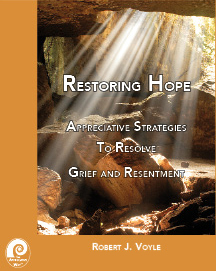
Use the Appreciative Way to
rapidly and effectively resolve
| • |
Traumatic Memories
|
| • |
Grief
|
| • |
Resentment
|
| • |
Shame and Guilt
|
This is not a book about
the need for hope!
This book will teach you how to resolve the consequences of distressing events.
Contents
208 pages of healing strategies and scripts.
Access to online resources.
Cost: $39.95
For details and purchasing see:
Restoring Hope
Resolving Traumatic Grief
Video of an Actual Session
See and learn what is possible in only one session.
Healing doesn't take time:
It's what you do
during the time
that brings healing.
For details and purchasing see:
Resolving Grief
Clergy Search Resource
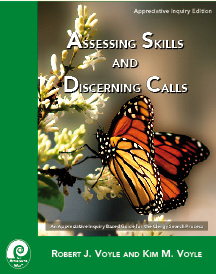
A comprehensive library of clergy search Resources
Congregations in transition can subscribe to over 380 pages of
strategies and templates for:
| • |
Exit Interviews
|
| • |
Creating Profiles
|
| • |
Establishing Search Criteria
|
| • |
Assessing Clergy Skills
|
| • |
Discerning Calls
|
Subscription is $1 per average Weekly Attendance
For details see:
Clergy Search Resources
|