

The Clergy Coach
The Rev. Dr. Rob Voyle is a leader in the development and use of appreciative coaching in his work with clergy. The Appreciative WayThe Appreciative Way, is Rob and Kim Voyle's synthesis of:
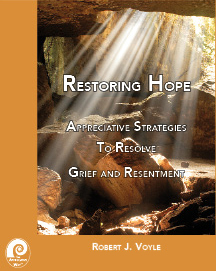
Restoring Hope
Practical Appreciative Inquiry based strategies to effectively resolve grief and resentment. Introducing Yes!3
Yes!3 is designed to help you
Yes! To God Subscribers receive monthly Appreciative Tips and notification of our upcoming training programs. Privacy: We never rent, sell, or share your email. 
|
Advanced Appreciative Coaching
Training Schedule: Advanced Appreciative CoachingNo Advanced Appreciative Coaching workshops are scheduled at this time. Please see training schedule for a complete listing of all training programs. Advanced Appreciative CoachingThis 5 day program concludes the Certificate in Appreciative Coaching. This five day program is also presented, and may be completed, in two 2.5 day parts as:
While it would be preferable to attend the Introduction to Coaching prior to taking this class clergy, therapists, and spiritual directors can take this class as an independent class. Recommended TextA large part of this program is based on Rob Voyle's book Restoring Hope: Appreciative Strategies to Resolve Resentment and Grief. You can purchase it a the The Appreciative Way Bookstore. This program also makes extensive use of the work of Steve Andreas. Our recommended Text is Transforming Yourself: Becoming who you want to be, by Steve Andreas. Published by Real People Press in 2002. It is available from the publisher. They often have restocked books at reduced prices. Course DescriptionPlease Note: This training program is highly experiential in nature. Participants will learn the advanced coaching strategies by applying them first to themselves and then by coaching others through them. Participants must be willing to personally engage in these exercises during the training. Program Content and Focus: ImagineeringSince coaching is about creating a preferred future and everything we think about the future is an act of pure imagination, coaching often involves helping a client to use their imagination to rehearse and create their desired outcomes. In this advanced coaching class we focus primarily on learning the techniques and strategies of imagineering or how to help clients change both the content and the structure of their experiences to develop their internal resources as they work to create their desired future. The term "Imagineering" was first used by Walt Disney in describing the work of the imagination in the creative process. It has subsequently been used by coaches to describe the techniques of using and restructuring the imagination in role rehearsal and practice exercises. The Structure of Experience There are two major aspects to the way people process, store and retrieve their experiences: the content of their experience and how they structure or represent the content. For example: when a preacher says "I can't imagine being able to preach like that," there are two things for the coach to pay attention to: "what" the person is trying to imagine (preaching in a certain way) and "how" they are actually trying to imagine preaching in a certain way. Some preachers might be relying on visual images of themselves preaching whereas others may be relying on auditory images and actually be imagining hearing them self preach. A more accurate statement of "I can't imagine being able to preach like that," would be: "I can't see myself being able to preach like that," or "I can't hear myself being able to preach like that." Similarly we have often heard people say something like: In this example the client knows something (the content) and it is in their head (the structure) as intellectual knowledge. What they want is to restructure it as an experience in their heart. Most coaching is oriented toward modifying the content of a person's experience, yet in this example changing the content or what a person knows in their head will typically not result in a change in their desired heart felt sense of self. Just getting someone to think confident thoughts will not help a person to feel confident. In this Advanced Coaching class you will learn and practice strategies to change the structure of client's experience to create fast and sustainable change. Learning ObjectivesBecause this is a multi-day program specific learning objectives are provided for each day. Specific Leaning Objectives Day 1: Participants will be able to:
Specific Leaning Objectives Day 2: Participants will be able to:
Specific Leaning Objectives Day 3: Participants will be able to:
Specific Leaning Objectives Day 4: Participants will be able to:
Specific Leaning Objectives Day 5: (half-day) Participants will be able to:
Who Should Attend This ProgramNot Just For ClergyOur Advanced Coaching Training is open to:
Continuing Education CreditThis program qualifies for 30 hours of continuing education credit. Partial continuing education credit is not provided. You must attend all 30 hours to receive continuing education credit. American Psychological Association The Appreciative Way is approved by the American Psychological Association to sponsor continuing education for psychologists. The Appreciative Way maintains responsibility for this program and its content. This program qualifies for 30 hours of continuing education credit. Board Certified Coach (BCC) The Appreciative Way's Certificate of Appreciative Coaching is a BCC founding CCE-approved coach training program. This program provides 30 contact hours of training toward The Certificate of Appreciative Coaching. Workshop FormatThe workshop will typically be conducted in a retreat setting with:
Typical Workshop Schedule:The following is a typical workshop schedule. The exact schedule may vary depending on location. For each specific program a flyer with dates, schedule times, and continuing education hours can be found on the training schedule page. Day 1-4 Day 5: Check the program flyers on the training schedule page for specific program details. No evening events are scheduled. Residential participants may gather after supper for socializing and informal conversations about the material that is being presented. Some variations in the daily schedule may occur depending on the training location. The above schedule includes lunch for commuters. When residential accommodation is provided, residential participants will also be provided with Breakfast and Supper during the course of the week. Attention is paid to managing personal energy during the training program while maximizing participants opportunities to learn. Because this training is intense we recommend people make appropriate travel plans and can begin the first days training rested so as to get the best possible return for your tuition expenses. Costs for 2026
Specific times and costs of all programs may vary depending on the hosting organization. Please check the schedule and registration page for additional workshop specific information. AccommodationAccommodation and facility use fees are extra and are dependent on the training locations and will be specified on the registration forms. Meals between sessions are typically provided for commuters. Cancellation and Refund PolicyTuition Refunds The tuition portion of your registration is completely refundable, minus a 5% service fee, up to the day of starting the program. Tuition fees can be transferred to an alternative program without penalty. Accommodation Refunds Any commuter or accommodation fees will be assessed within one month of a program if the reservation is cancelled. Commuter or residential accommodation fees can not be transferred to other programs. For more information please see our Cancellation Policies. PresenterRob Voyle is an ordained Episcopal priest, psychologist, and executive coach. He is the Director of the Clergy Leadership Institute. Rob was an original faculty member, and taught for five years at the College of Executive Coaching where he taught and coached hundreds of personal and executive coaches how to use appreciative inquiry as a basis for their coaching work.
|
|---|